Independence Training Program

By Dan Burke, 27 March, 2017

What were we thinking? Well, we encountered wood ducks this week in our Birding by Ear class when we strolled over to the pond at Sterne Park. Sure, there were the standard mallards with their easily recognizable quacking, but that other sound – that rising note – was that really a duck?

yes, it’s a wood duck, and there were several on the pod that day – a whole new bird sound for the group

Before going out, the class examined a number of casts of bird skulls, the discussion focusing on the different kinds of beaks that various birds have, and thus, the different things they feed on- predators with sharp, curved beaks, nut and seed feeders with powerful beaks to crack things open, and small pointed beaks for catching small insects for lunch.

Tomorrow is another birding by ear class, and we’ll see what new birds have returned for the spring.
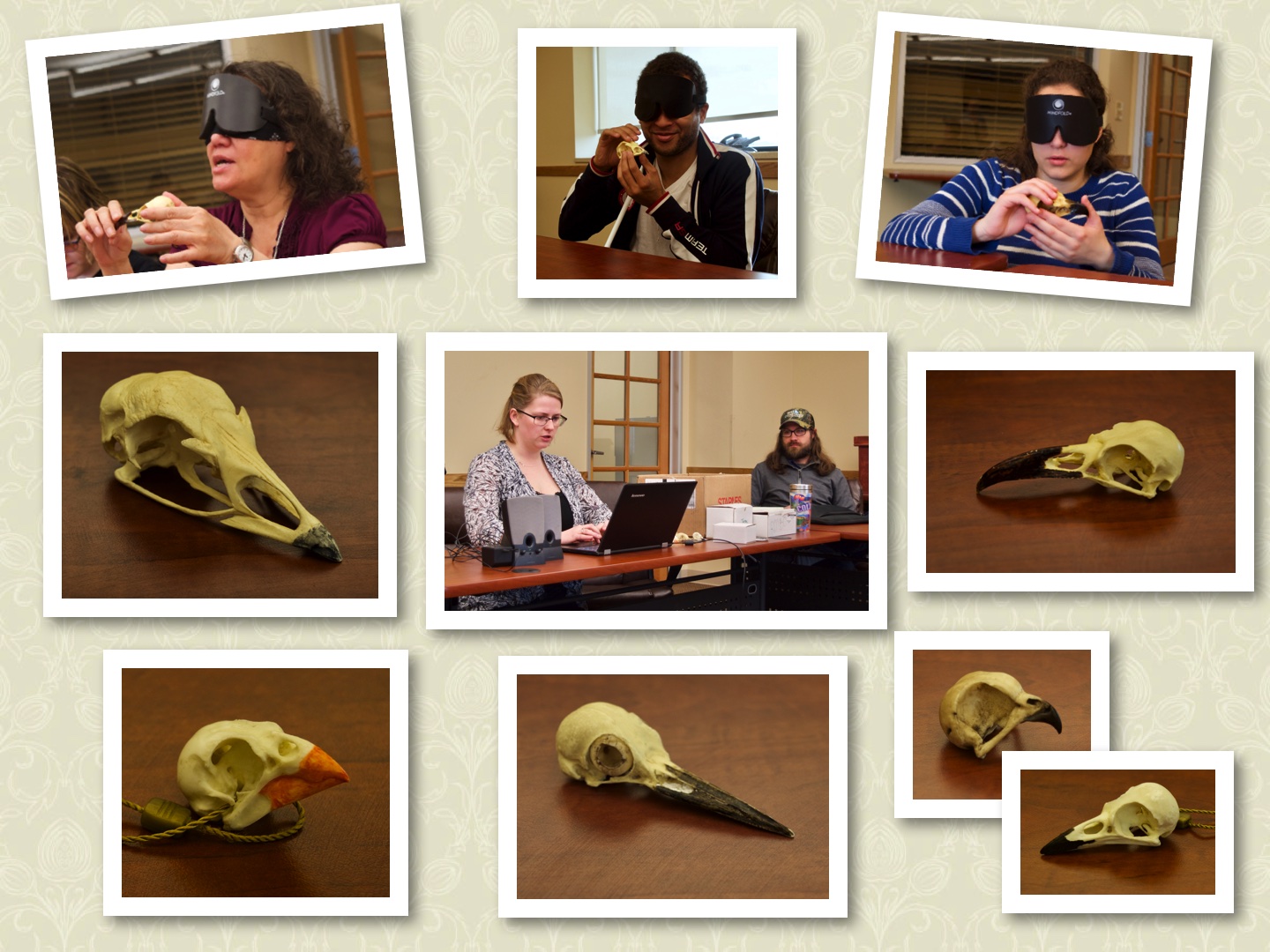
Birding by Ear Skulls Montage


By Dan Burke, 26 March, 2017

Last week was busy with drops and support drops.

The “Drop”, or independent drop is one of the two final requirements of our cane travel instruction. Ryan and Trevor both completed theirs last week, having been dropped somewhere in the Denver Metro area and permitted one question on their trip back to the Center.

The “support drop” is more or less a dress rehearsal for the independent drop. Everything is the same except that the student’s travel instructor goes along. The instructor, by the way, doesn’t know where they are either and also wears sleepshades. Both Julie and Suzie completed support drops last week.

The drop is the culmination of many months of instruction and daily practice of those travel skills, including how to orient, problem-solve, analyze and cross many kinds of intersections and how to find a bus stop. The confidence students gain from completing this requirement is obvious the minute they walk in the front door of the Center, having succeeded, and the announcement goes over the public address system congratulating them!

By Dan Burke, 22 March, 2017

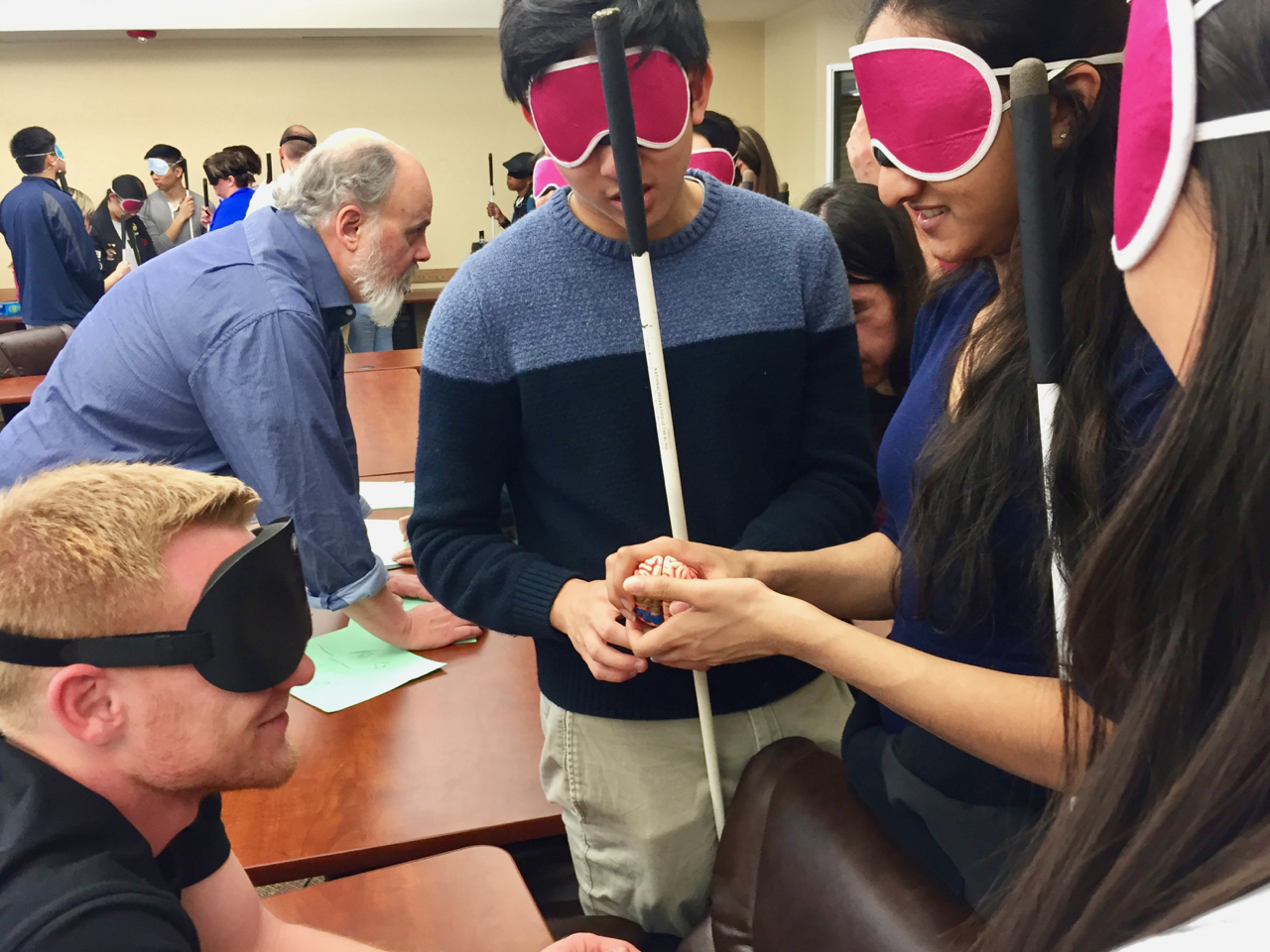
Students in sleepshades examine the mode of a brain on the table between them.
Ryan shows three Rice students a tactile model of a brain. This year’s group included students studying Cognitive Science and various biology-related majors.while wearing sleepshades

Here’s a shout out to this year’s crew from Rice University in Houston who came to work as volunteers on March 16 and 17. They spend an “Alternative Spring Break” volunteering, first at Winter Park with the NSCD adaptive ski program, and then in Littleton.

By Dan Burke, 21 March, 2017

Zen and the Art of Archery was a popular book in the 1970s among a certain crowd in which martial arts practitioners became adept at hitting the bullseye while blindfolded. What does that mean? Who really knows, other than it was the era of the “Kung Fu” TV series.

Nonetheless, our partners at NSCD arranged an archery class for some of our students, and it took place in the gym last Tuesday.

Dare we say it? It really hit the mark!

By Dan Burke, 21 March, 2017

Okay, Tuesdays can get a little wild anyway, what with Seniors coming and filling up our large conference room all morning. You gotta believe us – we love having them!

But meanwhile, down in the gym …

We had both Martial arts and Archery happening all at once. The wildest imaginations might have the martial arts students blocking and catching flying arrows, but that’s not at all the scenario. That’s just imagination …

A group of Martial Arts Students to the left and a row of Archery Students to the right

By Dan Burke, 13 March, 2017

Well, the mini-meal is “mini” in comparison to the final Home Management assignment in our Independence Training Program …

And it’s an interim step toward that final goal of cooking for 60 people. See, the mini-meal is only for fifteen!

Here, Suzie, Parker, Ellen and Lyne put their meals in motion and on the table in early 2017. They’re learning how to “take charge with confidence and self-reliance”

By Dan Burke, 27 February, 2017

As Trevor explains, he’s been “cubing” for years, figuring out better and faster ways to solve the Rubik’s Cube. Working out how to make the Cube tactile and using all that he’s already learned to solve it nonvisually is just a part of solving the blindness puzzle for Trevor – of taking charge and living the life he wants!